


5 Tips on How to be a Great Teacher, Not Just a Good One
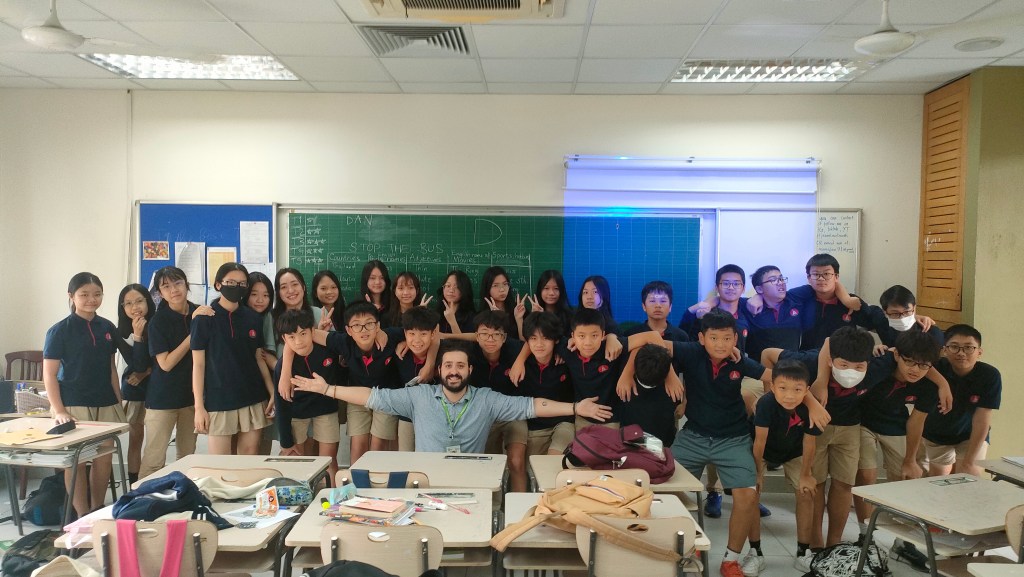
In my many years as an English teacher in Vietnam, I have taught students ranging from age 3 all the way up to 22. I’ve given lessons on things as simple as phonetics or the alphabet all the way up to more complicated skills such as writing research papers or using complex grammar structures. Some of the people I’ve taught could barely muster a “hello” in English while those I taught in my later years were almost as fluent as a native English speaker.
Having had such a diverse array of classes and having had to adapt my teaching methods so vastly, I can confidently say what makes a good teacher. Many traits or skills can make someone a good teacher. Providing lessons that are fun and exciting may work for some classes while other students may prefer an information-heavy or more technical lesson. Some teachers enforce strict rules and routines to ensure their students pay attention, with the hope that they’ll learn. Other teachers use jokes and games to encourage playfulness or create an entertaining atmosphere.
All of these approaches can make a teacher good, but what makes them great is both harder to pinpoint and harder to implement.
If I were to advise a new teacher on how they can be great rather than just good, I’d focus on five things, in no particular order- guidance, comfort, relationships, empathy and fallibility. I’ll elaborate on these things and break them down individually.
1. Guidance
One of the most important things I discovered while teaching is how rewarding it is for students to figure out the answer to a question by themselves. If a student is struggling to answer a question or to figure out a concept, the teacher should guide them to an answer rather than just telling them.
I like to think of a teacher’s job as similar to that of a mental-health therapist or counsellor. Their job is to help a patient figure out their own problems by talking them through, understanding the related feelings and guiding them to an answer on how they can deal with them. This gives patients a sense of accomplishment and helps them learn how to deal with their own issues by themselves in the future. This applies to a classroom setting too.
If you guide a student toward a conclusion by laying out the breadcrumbs with small nudges or clues, they can get to the answer themselves. This gives them a sense of achievement and encourages them to solve problems on their own in future, rather than to wait for the solution to be handed to them. This not only teaches them how to problem solve, but also increases their independence and curiosity. As a bonus, it will make your work easier as students will become less dependent on you for answers.
2. Comfort
Although it is preferable to have students figure out answers for themselves, it’s impossible for them to always be able to do so. A massive part of learning is making mistakes, and that’s why it is vital to create an environment where errors are not only accepted – they’re encouraged.
Making mistakes allows learners to see the difference between the correct way to do things (whether that’s language, maths, or science) and the incorrect way. Giving a frame of reference for comparison between right and wrong solidifies correct information in a students brain.
If a learner is chided or given negative feedback for getting things wrong, in most cases they will be hesitant about trying again in the future. Even if the teacher doesn’t react negatively to their attempt to answer, other students might joke about it, depending on the classroom environment.
That’s why creating encouraging all answers – even wrong ones – is integral to building a comfortable atmosphere.
My approach to this is to never tell a student that they’re explicitly wrong but to compliment their attempt. If a student puts up their hand to answer a question and gets it wrong, don’t say “No” or “that’s incorrect” or along those lines. Try softer responses, such as “That’s a good answer, but not quite. Do you want to try again?”. If it seems like they’ really can’t answer, ask other students “can anyone help X with the answer?” rather than phrasing it in a way that implies someone else can do it better.
Putting this into practice creates an atmosphere that puts students at ease while encouraging them to keep trying, even when faced with difficulty. If they feel like they can make mistakes publicly without a negative outcome, they won’t be discouraged from putting in further effort.
A comfortable environment can be galvanized even further with the next tip.
3. Fallibility/Imperfection
In my early teaching days, a manager advised me that a teacher should never admit when they make a mistake in front of students and should instead say they were testing the students knowledge. “A teacher should be infallible”, he told me. I strongly disagree.
Allowing students to see that even teachers can make mistakes shows them that just like them, you are an imperfect human being capable of making mistakes. Demonstrating that you’re fallible, allowing them to also feel secure in making mistakes.
Of course, if you’re making a significant number of mistakes this could weaken the trust that students put in you as an educator (and maybe you should get more sleep!) but acknowledging an error when one is pointed out can contribute strongly to the comfortable classroom dynamic.
You can go a step further and thank students who point out mistakes or compliment their attentiveness. Furthermore, if you’re just having a bad day or are tired and making an unusual amount of mistakes, there is no shame in apologizing or admitting that to students (how open you are about this depends on their age level).
Although maintaining the teacher and student relationship dynamic is important it is beneficial to you and your students if they know that you too are a person who occasionally gets things wrong. This works both ways, which brings me to the next point.
4. Understanding/Empathy
Much like how it’s important to show your students that you are fallible, it’s equally important to remember that students have their own lives outside of the classroom. Their behavior or actions in the classroom can often not a reaction to you or your lessons, but to things going on outside of school.
If a student is falling asleep in class, try to know the difference between someone who is lazy disrespectful or just bored as opposed to somebody who was kept up late or is sick.
If you catch someone in your class speaking to someone while you’re speaking to the class (which can be very irritating!), try not to assume that they’re being disrespectful or that they’re not interested in your lesson. They might be asking for a pen from someone. They might not understand what you’re talking about and are asking a friend rather than interrupting you.
If it seems a student is not making an effort to do their work, try to find out why if you have the time. Is it because they don’t care? Or is it because it’s too difficult so they’re afraid to try? Maybe they have something else on their mind that’s preventing them from focusing?
These are only a few specific examples, but the overall point is to try and empathize with students and understand that they may have unobvious explanations for why they are behaving a particular way.
It can be very easy as a teacher to jump to the conclusion that a students actions are a direct response to your teaching, and to take it personally. I’ve known teachers who get angry at students who were misbehaving in class only to find out that they were having difficulties at home, or to tell off a student for falling asleep in class too much without knowing that the student is made to regularly go to night classes until 11pm, resulting in extreme tiredness.
As teachers we can never know what is happening in a students personal life, so try to be empathetic where you can.
This brings us on to the last tip.
5. Relationships
This last tip is one that’s more difficult to define and not easy to learn.
Creating a bond with your students can completely affect their academic performance, their classroom behavior and the longevity of what they learn with you. Studies have shown that the perception of a teacher can have a large impact on a class’s success.
In my experience, students who explicitly expressed that they like or love having me as a teacher were more likely to try harder once they got to know me. I’ve had countless students who start the school year misbehaving and treating my classes as a joke, but have gone on to putting their hand up for every question and trying to impress me after just a few weeks. I’ve had students who do extra work such as writing extra essays just because they want to have some extra time talking to me about it. The bond I build with each class is completely dependent on their personality as a whole – one class might be more boisterous and noisy whereas another is more reserved and shy. Figuring out how to interact with each class in a way that’s friendly and nurturing, yet authoritative at the same time, is no easy feat. It does make teaching so much more rewarding however.
This aspect of teaching is totally reliant on the teacher’s personality however, and not necessarily something that can be learnt. Some things to try and put into practice to create a nurturing environment and strong bond with your students are:
- Try to remember things individual students tell you about themselves or their lives. Showing that you notice small things about them fosters a bond. For example, if you know a student loves to draw, and you’re talking about artists in class you could make a lighthearted comment about how that student will be an artist. Try not to focus too much on one or a few students though, as you risk making others feel left out
- Try to have laughter in your classroom. This can be difficult depending on the age group or cultural differences, but smiling and laughing yourself encourages smiles and laughter from the class
- Compliment your students! Keep them appropriate of course, commenting on students’ appearance is rarely appropriate (unless it’s a cool new hat or nice haircut) but saying genuinely nice things to them will inevitably make them like you
- Talk about yourself sometimes! Again this is dependent on the age group, but telling your students about a movie you saw last night, or (with older students) about your personal life creates a sort of friend-like relationship
These are simply personal examples of fostering relationships with my students, which you can adapt to your role, and should not be taken as rules. Each teacher is different, as is every classroom. Creating a positive bond is usually something that comes naturally and can’t be forced, so just be yourself and see how students react to that! You’ll learn with time.
So to recap:
1. Guidance – Guide your students to answers rather than giving them
2. Comfort – Create a comfortable class environment where mistakes are OK
3. Fallibility – Acknowledge your own mistakes, you’re human!
4. Understanding – Empathize with students and understand they’re humans too
5. Relationships – Bond with your students and create positive relationships with them
Overall, what makes a teacher great is their individual ability to gauge a classroom and create an environment that works for themselves and for the students. The number of possibilities for a classroom dynamic and the various interactions that can happen within that environment are endless, so selecting what works best is difficult to do. Each teacher will approach a situation differently, but these tips come from my experience and have helped me to be the best teacher I can be. I hope that they can help you too.
 Jason Law
Leave a comment